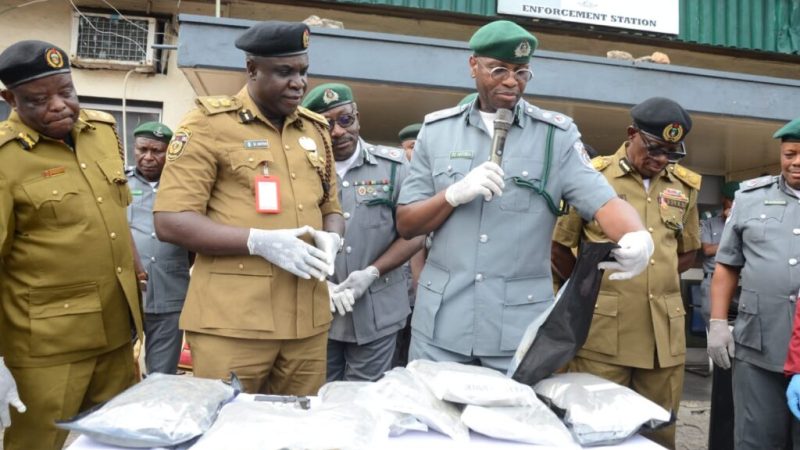

Port Reforms: Customs, PEBEC Collaborate on Digitalisation Agenda
Port Reforms: Customs, PEBEC Collaborate on
Digitalisation Agenda
By Silas Onuoha
Nigeria’s drive to modernise its port system and improve the ease of doing business has received a fresh boost as the Nigeria Customs Service (NCS) and the Presidential Enabling Business Environment Council (PEBEC) deepen collaboration on port digitalisation and trade facilitation reforms. The partnership is aimed at eliminating bureaucratic bottlenecks, accelerating cargo clearance processes and positioning Nigeria’s ports as a more efficient gateway for international trade.
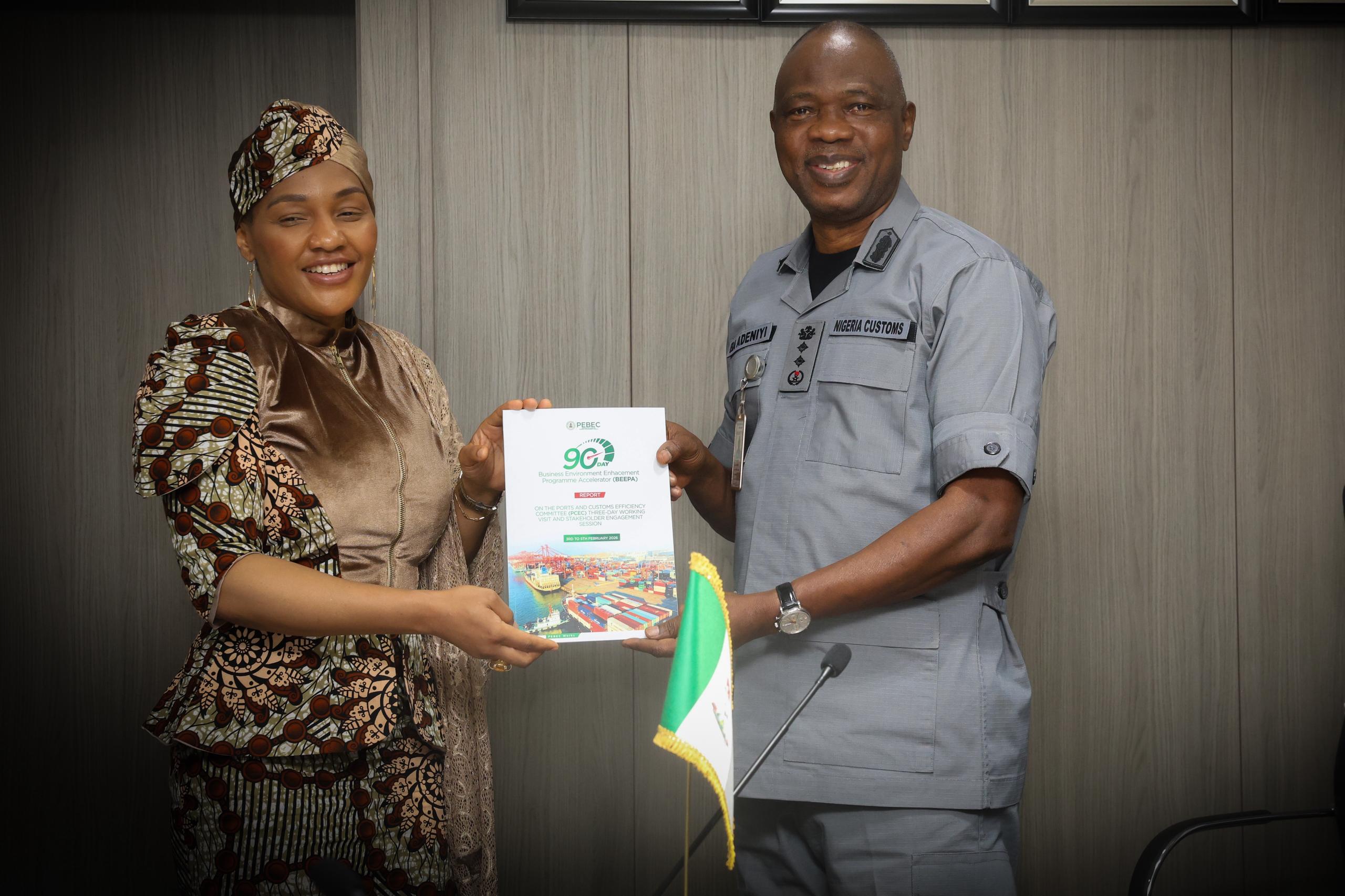
The Comptroller-General of Customs, Adewale Adeniyi, reaffirmed the Service’s commitment to building a fully paperless port environment when he received the Director-General of PEBEC, Princess Zahrah Audu, during a high-level strategic meeting at the Customs Headquarters in Maitama, Abuja, on Friday, March 6, 2026.
Adeniyi explained that the Nigeria Customs Service has continued to prioritise digital reforms as part of its broader trade modernisation agenda, noting that increased collaboration with PEBEC would further strengthen ongoing efforts to streamline port operations.
He disclosed that the Service has institutionalised regular engagements with key stakeholder groups, including the American Business Council and other trade associations, to identify operational challenges and develop practical solutions that support smoother trade processes.
“Such consultations enable the Service to identify operational bottlenecks and obtain direct feedback from businesses that interact with Customs at the nation’s ports,” Adeniyi said.
The CGC also revealed that the Service recently conducted a Time Release Study (TRS) in partnership with the World Customs Organisation (WCO) to scientifically assess the time and cost associated with cargo clearance at Nigerian ports. Tin Can Island Port in Lagos was used as the pilot location for the exercise.
According to him, the study involved extensive participation from stakeholders across the port community, including shipping companies, terminal operators, the Nigerian Ports Authority, licensed customs agents and financial institutions. The findings were compiled in a comprehensive report that was publicly launched on January 26, 2026.
“We deliberately involved every segment of the port community in the exercise so that the findings would reflect the real operational environment. The report has already provided valuable insights that are guiding some of the reforms we are implementing,” Adeniyi noted.
He added that while some of the concerns raised by stakeholders during the study have already been addressed, others will continue to inform future reforms within the Service.
Speaking on the issue of 24-hour port operations, the Customs boss emphasised that such an initiative can only succeed if all critical actors within the logistics chain fully participate.
“We once deployed officers to support round-the-clock port operations, but the effort faced challenges because other key operators such as banks, shipping companies and terminal operators were not fully integrated into the system,” he explained.
Adeniyi further noted that Customs is advancing plans to establish a completely paperless operational environment. According to him, most core procedures, including pre-arrival documentation, cargo declaration, duty payments and cargo release communication, have already been digitised.
He however observed that delays still occur in situations where some operators continue to rely on manual documentation.
“Where delays still occur, they are often linked to operators who still depend on physical documentation. That is an area we intend to address in the coming months,” he said.
The CGC also highlighted ongoing investments by the Service in scanning technology and ICT infrastructure to strengthen risk-based cargo management and reduce the need for physical cargo examination.
He noted that international development partners, including the World Bank, the International Monetary Fund and the World Trade Organisation, have continued to encourage Nigeria to expand the use of non-intrusive inspection technologies in line with global best practices.
Earlier in her remarks, the Director-General of PEBEC, Princess Zahrah Audu, said the Council is currently implementing a 90-day Business Environment Enhancement Programme aimed at addressing challenges identified in its Business Facilitation Compliance Report released in November 2025.
She explained that the initiative is designed to improve efficiency across Ministries, Departments and Agencies that interact with businesses by fostering closer collaboration and removing institutional bottlenecks affecting Nigeria’s business environment.
As part of the programme, Audu revealed that PEBEC recently conducted a three-day operational assessment at the Lagos ports in collaboration with the Nigerian Ports Authority. During the exercise, officials closely observed cargo-handling procedures from vessel arrival to cargo exit while also engaging with regulators and private sector operators.
“The exercise enabled us to identify key operational challenges affecting port efficiency and to develop practical recommendations for improvement,” she said.
Among the issues highlighted during the assessment were the need to strengthen joint vessel boarding by regulatory agencies, improve coordination during cargo inspections and enhance the deployment of technology across port operations.
Also speaking, the Deputy Comptroller-General of Customs in charge of ICT and Modernisation, Oluyomi Adebakin, noted that vessel arrival schedules already provide sufficient data for operational planning at the ports.
She explained that effective utilisation of such information would allow the Service to deploy personnel more strategically rather than keeping officers stationed at terminals while awaiting vessel arrivals.
“The concept of 24-hour port operations should focus on smarter deployment of personnel based on vessel schedules, not merely extending working hours,” Adebakin said.
She further reaffirmed the Service’s readiness to address operational issues raised through the PEBEC reporting platform, stressing that sustained collaboration between the two institutions remains crucial to improving port efficiency and strengthening Nigeria’s overall business environment.
Similarly, the Deputy Comptroller-General of Customs in charge of Tariff and Trade also emphasised the effectiveness of various trade facilitation tools introduced by the Service to speed up cargo clearance for compliant traders.
Among the initiatives highlighted were the Authorised Economic Operator (AEO) Programme, Advance Ruling System, and the One-Stop-Shop platform, all designed to support the Federal Government’s objective of enhancing trade efficiency and improving Nigeria’s competitiveness in global commerce.