

Lagos to Build Nigeria’s Largest Waste-to-Energy Plant to Tackle 13,000 Tons of Daily Waste
Lagos to Build Nigeria’s Largest Waste-to-Energy Plant to Tackle 13,000 Tons of Daily Waste
By Innocent Onoh
The Lagos State Government, through the Lagos Waste Management Authority (LAWMA), has concluded plans to build the first and largest waste-to-energy conversion plant in Nigeria as part of efforts to strengthen the management of the approximately 13,000 tonnes of waste generated daily in the state.
The planned facility, to be located in Epe, will process about 3,000 tonnes of waste daily and is part of several waste management projects scheduled to be implemented over the next five to ten years.
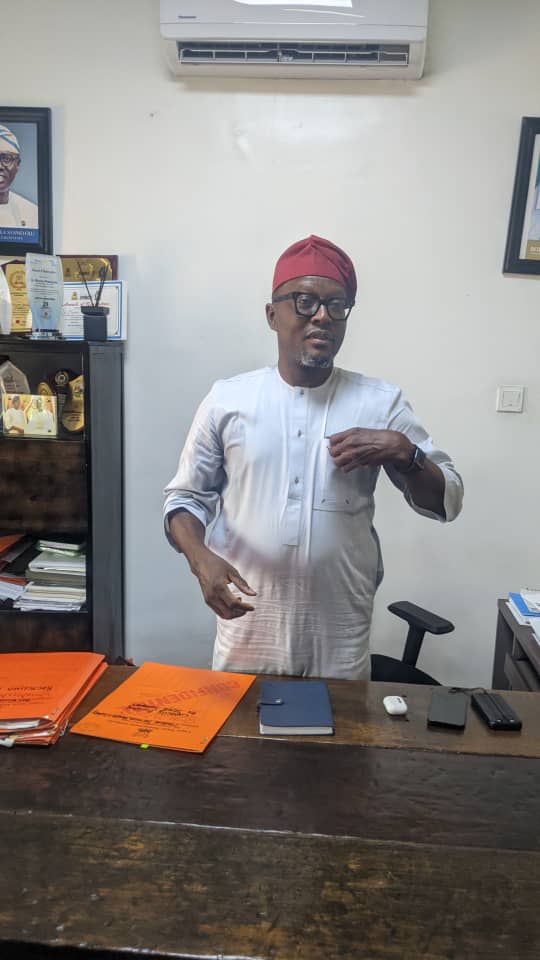
Managing Director of LAWMA, Dr. Muyiwa Gbadegesin, disclosed this during a special media chat at the authority’s headquarters in Ijora Olopa.
He said the Lagos State Government would make significant investments in waste management infrastructure within the next decade to improve waste collection, treatment and disposal across the state.
According to him, the initiative involves upgrading critical infrastructure needed to manage the growing volume of waste generated in Lagos.
Dr. Gbadegesin explained that the proposed waste-to-energy plant will generate about 50 megawatts of electricity from the 3,000 tonnes of waste processed daily.
“The facility will be located at a closed landfill site in Epe, near the Lekki Free Trade Zone, the Dangote Refinery and the Lekki Deep Sea Port, among other major developments that are expected to benefit from the electricity generated,” he said.
He added that the state also plans to build another waste-to-energy facility in Badagry as part of its long-term waste management master plan.
The LAWMA boss further revealed that the authority has introduced a smaller waste treatment technology known as a bio-digester, which converts organic waste into biogas.
According to him, the first unit has already been installed at Ikosi-Ketu Market, where organic waste such as spoiled fruits and vegetables is converted into gas used for electricity generation, cooking and charging mobile phones.
“The system processes about 200 kilograms of organic waste and produces biomethane gas, similar to compressed natural gas,” he said.
Gbadegesin noted that the state plans to replicate the technology across markets and densely populated communities to reduce waste accumulation while generating energy locally.
He also listed other investment areas to include the procurement of waste bins, compactor trucks and tricycle compactors designed to access communities with narrow roads.
He said the state plans to acquire about 800 additional compactor trucks for LAWMA and 100 trucks for Private Sector Participants (PSP) operators, with the procurement to be captured in the state’s annual budget.
“In order for us to achieve a higher rate of waste collection, treatment and disposal, we have to make significant investments in infrastructure such as waste bins, compactor trucks and tricycle compactors,” he said.
Dr. Gbadegesin explained that the government is partnering with private sector investors because the state cannot single-handedly finance or manage all the required infrastructure.
As part of the partnership arrangement, he said the state has signed Memoranda of Understanding with local and international investors to construct transfer loading stations at Olusosun.
He explained that the new transfer stations would enable the state to shut down the two long-standing dumpsites within about 18 months after construction begins.
According to him, waste from those locations will be transported to modern material recovery facilities, including one planned for Epe.
Gbadegesin described a material recovery facility as a plant where waste is sorted and processed to extract valuable materials, noting that about 90 percent of the waste generated in Lagos contains useful and recyclable items.
He listed recyclable materials found in the waste stream to include plastics, metals, textiles and organic matter.
The LAWMA boss noted that while the government continues to work with about 450 PSP operators assigned to different areas to evacuate waste, residents must also play their part by paying their waste management bills.
He stressed that Lagos operates a “polluter pays” principle, which requires residents to pay for the waste they generate.
On complaints about delays in waste evacuation in some parts of the state, Gbadegesin urged residents to report such cases through the authority’s designated channels for prompt intervention.
According to him, LAWMA operates a customer service system that allows residents to lodge complaints when PSP operators fail to evacuate waste as scheduled.
Residents can contact LAWMA via 07080601020 or 08000052962, or send an email to info@lawma.gov.ng for assistance.
He explained that although LAWMA serves as the regulatory body, it works with about 450 approved PSP operators who are responsible for waste evacuation within designated areas.
Gbadegesin also highlighted recent interventions carried out by the authority, including the large-scale evacuation of refuse along the Lagos–Badagry Expressway corridor.
He noted that environmental sustainability remains a major priority for the state government.
“One of the key areas we are focusing on this year is environmental sustainability because it directly affects the health, wellbeing and quality of life of residents,” he said.
“Our goal is not just to talk about the problem but to ensure practical steps are taken to address it.”
As part of sustainability efforts, Gbadegesin announced plans to recruit additional environmental health officers to strengthen enforcement of sanitation regulations across the state.
He said the state government has approved the recruitment of 300 additional environmental health officers, which will increase the number from the current 77 to 377.
According to him, the officers will move from house to house and across communities to ensure residents maintain proper sanitation practices and have waste bins.
He warned that dumping refuse on road medians is now an offence in Lagos State, urging residents to properly store their waste in designated bins for collection by PSP operators.
“If you live in Lagos, you are expected to have a waste bin. We are bringing back the ‘Wole Wole’ sanitation enforcement system of the past to ensure compliance and sustainability,” he said.
